
ASSN has a 13 member Executive Committee that provides strategic leadership to the network. The Executive Committee is elected by the General Assembly to a three year term.
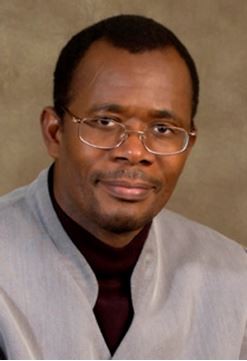
Boubacar N’Diaye
Chair
Boubacar N’Diaye is an Associate Professor of Political Science and Pan-African Studies at The College of Wooster in Ohio, USA. He is a widely published scholar specialising in civil-military relations, security, and democratization. He is the author of numerous journal articles and academic papers on these subjects, as well as the author, co-author or co-editor of several books including The Challenge of Institutionalizing Civilian Control (2001), Not Yet Democracy: West Africa’s Slow Farewell to Authoritarianism (2005), and Challenges of Security Sector Governance in West Africa (2008). He has been a consultant to various agencies and organizations in Africa, the United States and internationally, among them the African Union, the UN, ECOWAS, the World Bank, SIPRI, ACSS and the SSRC’s Conflict Prevention and Peace Forum. Professor N’Diaye is a member of several International Advisory Boards. He also contributes to various academic and advocacy initiatives designed to reform security establishments and institutionalize democratic governance in the security sector of African states.

Sandy Africa
Vice Chair
Sandy Africa is an Associate Professor of Political Sciences at the University of Pretoria, South Africa. Prior to this she held several senior appointments in the South African security services. From 1995 to 2001, Africa headed South Africa’s civilian intelligence services’ Academy. From 2001 to 2004, she served as Deputy Director-General Corporate Services of the South African Secret Service, and from 2004 to 2007, she was the Chief of Staff in the Ministry for Intelligence, after which she formally left the service to pursue an academic career. Recently, on the request of South Africa’s Minister for State Security, Africa was involved in the reorganization of the country’s civilian intelligence agencies into a single State Security Agency. Her publications include Changing Intelligence Dynamics in Africa, co-edited with Johnny Kwadjo and published by the Global Facilitation Network for Security Sector Reform (GFN-SSR), University of Birmingham; and Well Kept Secrets: The Right of Access to Information and the South African Intelligence Services, published by the Institute for Global Dialogue (IGD) and Friedrich Ebert Stiftung (FES). She has also published several book chapters and other articles on the subject of intelligence governance, mainly on South Africa’s experience of reform in this sector. Africa holds a Masters degree in African Politics from the University of South Africa and a PhD in Management from the University of the Witwatersrand
Eboe Hutchful
Executive Secretary
Eboe Hutchful is a professor of African Studies at Wayne State University in Detroit, Michigan, USA, and has taught at several other universities in Africa and North America, including the University of Toronto, Trent and Waterloo Universities in Ontario, the University of Ghana and the University of Port Harcourt. He is a long-time researcher on civil-military relations, security sector reform, and international development issues. He is the author of Ghana’s Adjustment Experience: The Paradox of Reform (James Currey, 2002), co-editor (with Wuyi Omitoogun) of Budgeting for the Military Sector in Africa: the Processes and Mechanisms of Control (Oxford University Press, 2006), and co-editor (with Abdoulaye Bathily) of The Military and Militarism in Africa (Codesria Books, 1998). Professor Hutchful is a member of the UN Secretary General’s Advisory Board on Disarmament Matters (ABDM). He is also a member of the International Advisory Board of the Geneva Centre for the Democratic Control of Armed Forces (DCAF); the UN International Policing Advisory Council (IPAC); the Governing Board of the Global Consortium for Security Transformation (GCST); and the Advisory Group of the (erstwhile) Global Facilitation Network for Security Sector Reform (GFN-SSR).
Uju Agomoh
Regional Coordinator, West Africa
Dr. Uju Agomoh is the founder and director of Prisoners Rehabilitation and Welfare Action (PRAWA), a Security, Justice and Development focused NGO with regional/continental initiatives in several African Countries. She has served as a member of the National Human Rights Commission of Nigeria (NHRC) and was the Commission’s Special Rapporteur on Police, Prisons and Centres of Detention (2001-2008). She has also been a member of the Nigerian Presidential Advisory Committee on the Prerogative of Mercy (2006-2009); Member of the coordinating committee of the Association of Security Sector Education and Training (ASSET); Council Member of the International Rehabilitation Council for Torture Victims (IRCT); Board Member of the International Corrections and Prisons Association (ICPA); and Chair of the ICPA Developing Countries Committee. Dr Agomoh is also a Research Fellow at the University of Nigeria Institute for Development Studies (IDS). Her recent research work has focussed on the topics of Gender and the Criminal Justice System, Sustainability of Penal Reform Interventions and Management of Pre-trial Detention, Mentally-ill Detainees, Prison-based and Community-Based Re-entry Programmes, and the Prevention of Torture.
Lt Col (Rtd) Jerry Kitiku
Regional Coordinator, East Africa and the Great Lakes Region
Jerry Kitiku is the Director of the Security Research and Information Centre (SRIC-Kenya), a non-profit think tank that provides data and information on human security and the security sector in Kenya, the wider Great Lakes Region and the Horn of Africa. A retired Kenya Navy officer, Lt Col Kitiku is an expert on human security dynamics and conflict. He has both command and administrative experience at senior levels in the military and was a senior instructor at the Defence Staff College (DSC) in Nairobi. In the early 2000s, he was among a team of experts that crafted an Implementation Plan and Agenda for Action, on request by the Kenya Government, for the Nairobi Declarations on Small Arms and Light Weapons (SALW). He was also part of a research team that conducted national surveys on the problem of SALW and the development of national action plans in Burundi, the Democratic Republic of Congo (DRC), Kenya, Rwanda, Tanzania and Uganda. Lt Col Kitiku also served for many years as a security attaché in various Kenyan diplomatic missions abroad
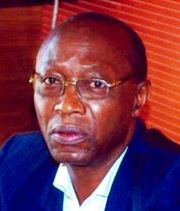
Brigadier (Rtd) Misheck Chirwa
Regional Coordinator, Southern Africa
Misheck Chirwa is a peace and security researcher and a lecturer at the Mzuzu University Centre for Security Studies in Malawi. He is also the Coordinator of the Southern African Defence and Security Management Network (SADSEM), which is the ASSN’s regional hub for Southern Africa. A retired Brigadier of the Malawi Defence Force, Misheck is a graduate of the Royal Military Academy in Sandhurst, UK, and the Command and General Staff College (CGSC) in Fort Leavenworth, USA. In his military career he served at various times as Commandant of the Malawi Armed Forces College; Defence Advisor at the Malawi High Commissions in Mozambique and South Africa respectively; and as a member of the Joint Verification Commission during the mediation of the Rome Peace Accords that ended the Mozambican Civil War in 1992. Misheck holds a Masters degree in Strategic Studies from the University of Derby; a Professional Certificate in Defence Management from the University of the Witwatersrand; and is at the moment pursuing a PhD in Security Management at the University of the Witwatersrand. He has conducted research on HIV/AIDS in the Malawi Defence Force and his other research interests include a focus on Malawi’s National Security Strategy and regional peace and security issues in Southern Africa..
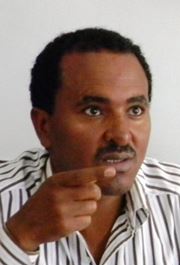
Medhane Tadesse
Regional Coordinator, Horn of Africa
Medhane Tadesse is a specialist on African Peace and Security. He has taught at various universities in Ethiopia and abroad and has written extensively on African security and related topics, spawning four books, over 160 briefing papers, articles, commentaries and policy memos. A lot of his work has dwelt the pertinent issues of regime stability, vulnerability to conflict, ethnic conflict, armed violence, globalised security and diplomacy, militarisation, governance and humanitarian crisis in Africa. Professor Tadesse has served as a consultant to several African governments, international and inter-governmental organisations on issues relating to peace and stability. He runs the Peace and Security Studies Directorate at the Centre for Policy Research and Dialogue (CPRD) in Juba, South Sudan. He is also a columnist and frequent commentator on global and regional security issues, and is the editor of The Current Analyst, an online journal that examines issues of peace and security in Africa..

Niagalé Bagayoko-Penone
Member
Dr. Niagalé Bagayoko-Penone is the Programme Manager for the Maintenance and Consolidation of Peace Programme of the International Organisation of La Francophonie (OIF). She has conducted extensive field research in several francophone African countries, much of it anchoring on the interface between security and development. She has been a lecturer at the Institute of Development Studies (IDS) – University of Sussex (UK) and the Institute of Political Studies in Paris; an Associate Fellow at the Centre for Research and Education on Strategy and Technology (US-CREST); and a Post-Doctoral Research Fellow at the Institute of Research for Development (IRD) in France. In 2003, she won the Prize for Scientific Research awarded by the French Ministry of Defence. She has also been a consultant for the African Union; the Department for International Aid (DFID); the International Security Sector Advisory Team (ISSAT); the Centre for Study of the Social Science of Defence (C2SD); and the French Ministry of Defence..
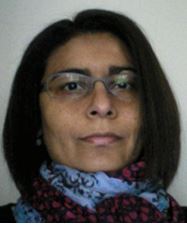
Anícia Lalá
Member
AníciaLalá is Security Sector Reform Advisor at the International Security Sector Advisory Team in the Geneva Centre for the Democratic Control of Armed Forces (DCAF). She has worked in the field of international security cooperation for 15 years and has combined practitioner and academic experience in the fields of international politics, conflict resolution, development, and security.
She is a founding member of the African Security Sector Network and has served on its Executive Committee for a number of years.
Anícia held a lecturing position in Conflict and Peace Studies at the Higher Institute for International Relations (Mozambique) and performed cumulatively as an advisor to the Rector of the same institution. She was also employed by the Ministry of Defence of Mozambique and served at the National Directorate for Defence Policy, with responsibilities in the fields of international co-operation and institutional planning and coordination. Subsequently she worked as Deputy Director for Africa at the Global Facilitation Network for Security Sector Reform, when the project was based at Cranfield University, UK. She also worked as a network coordinator for the African Security Sector Network, and is currently a member of its Executive Committee. She participated in several regional and international research projects and more recently acted as the Vice-Chair of the Working Group on Privatisation of Security of the Global Consortium on Security Transformation. Her main research focus has been on the fields of Democratisation, Conflict Resolution, Peace Building and Security Sector Reform. She is currently a PhD researcher at the Department of Peace Studies, University of Bradford, UK. Her publications include “The Difficulties of Donor Co-Ordination: Police and Judicial Reform in Mozambique” in G. Peake, E. Scheye& A. Hills (eds) Managing Insecurity: Field Experiences of Security Sector Reform Routledge: Milton Park and New York, 2008, pp.77-94; “Democratic Governance and Security Sector Reform: realities from post-war Mozambique” Nação e Defesa, 144, September 2006, pp. 35-59; and “DDR in Mozambique: the Borderlines of the Success Story” in A. Fitz-Gerald, H. Mason (eds) From conflict to community: a combatant’s return to citizenship GFN-SSR: Shrivenham, 2005, pp.155-185.
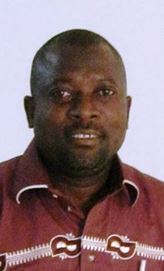
Paul Ahiave
Member
Paul Ahiave is a Security and Governance researcher from Togo. He currently heads the Democratic Governance Programme at the Centre for Democracy and Development (CDD) in Abuja, Nigeria. He has previously worked for the Arms Control Programme of the African Strategic and Peace Research Group (AFSTRAG) in the Niger Delta region of Nigeria. His work with in this programme saw him recognised in the 2004 Who Is Who in Small Arms Directory, published by the International Action Network on Small Arms (IANSA). From 2001-2007, he was actively involved in the civil society’s contribution to the ECOWAS Small Arms Process that culminated in the establishment of a Small Arms Unit at the ECOWAS Commission, as well as the development of the ECOWAS Moratorium and subsequent Convention on Light Weapons. Paul has also served as Consultant and Resource Person on several platforms including as a Trainer for the European Union observer mission to the 2010 Togolese Presidential elections; Resource Person to the Briefing of International Republican Institute (IRI) and National Democratic Institute (NDI) delegation to the 2011 Nigerian General Elections; Partner in the UNDP Democratic Governance for Development (DGD) programme in Nigeria; Resource Person to the AU Panel of the Wise on Strengthening Political Governance for Peace, Security and Stability in Africa; and a Consultant to the ECOWAS 2012-2015 Conflict Risk Assessment Study. In 2011 – 2012, he also had speaking roles at the African Union’s Thematic Workshops of the Panel of the Wise. A writer of many seminar papers, articles and study reports, Paul writes monthly for the West Africa Insight, a regional publication supported by the Rockefeller Foundation. He is fluent in English, French, German and several African languages.

Janine Rauch
Member
Janine is a South African criminologist with many years of experience in the strategy and management of large security and justice programmes. She has extensive experience in policy research and civil society activism on the subjects of policing, accountability, crime and transition in South Africa, as well as issues of governance, civil society and community safety elsewhere in Africa. She began her career with a focus on police accountability and police reform during South Africa’s transition to democracy. When South Africa attained democratic rule in 1994, Janine was appointed an advisor to the Minister of Police, a role that involved advising on various aspects of police reform in the post-Apartheid era, including basic police training, the amalgamation of 11 Apartheid-era police forces into one new police service, responsibility for donor liaison and the coordination of donor support for the police reform effort. She later worked for some years on crime prevention, particularly on multi-agency prevention processes and on non-criminal-justice types of prevention. Upon leaving the South African public service, Janine worked as an independent consultant for a variety of International NGOs and donors on programme design and evaluation. Much of her work since 2007 has focussed on citizen participation, governance and community-level accountability in SSR processes. In 2011 Janine worked for the International Security Sector Advisory Team (ISSAT) in Geneva as a senior SSR consultant on projects in Serbia, Mali, South Sudan and Switzerland, while consulting part-time on police accountability for the Justice for All (J4A) programme in Nigeria. In 2012 she assisted with the establishment of Corruption Watch, a new trade-union inspired civil society organisation in her native South Africa. In 2013 she led the design of a new Community Safety programme for DFID and the Government of Ethiopia. She is an active member of the ASSN Roster of African SSR Experts

Robin Luckham
Member
Robin Luckham is a political sociologist with 50 years professional experience. He began his academic career in Nigeria and Ghana, over the years establishing himself as an authority on the politics, security and political economy of Sub-Saharan Africa, with special reference to Ghana, Nigeria, South Africa, Somaliland, Uganda, Tanzania, Ethiopia, Eritrea, Liberia, Senegal and Mali. He has also held teaching positions at Manchester University, Harvard University and at the Australian National University. In 2006, he became the founding Chair of the Global Consortium on Security Transformation (GCST), and in 2002-2007 chaired the International Advisory Group of the Global Facilitation Network on Security Sector Reform (GFN-SSR). Prof Luckham is currently a post-retirement Research Associate at the Institute of Development Studies (IDS), University of Sussex (UK).
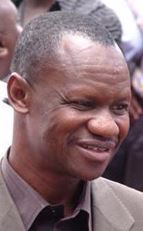
David Pulkol
Member
David Pulkol is the former Director-General of Uganda’s External Security Organisation (ESO), as well as the former Executive Chairman of the African Leadership Institute (AFLI), a public policy think tank based in Kampala.
David has also served in the past as a Cabinet Minister in the Ugandan government, an elected Member of Parliament and UNICEF Deputy Director for Eastern and Southern Africa.