
 PRESS RELEASE
19 November 2026 | Accra, Ghana – The African Security Sector Network (ASSN) has formally commenced the implementation of its Ghana Police Human Rights Project with a maiden stakeholder engagement aimed at initiating the development of a comprehensive Human Rights Training Manual for the Ghana Police Service. The initiative follows an earlier endorsement of the project by the Minister for the Interior.
The engagement forms part of the implementation of the project, Enhancing Human Rights Protection, Building Trust, and Preventing Radicalisation in Ghana and West Africa, supported by the Danish Institute for Human Rights (DIHR), with funding from the Embassy of Denmark in Ghana. The two-day event held from November 18 – 19, 2026 in Accra, provided a platform to introduce the project’s rationale, objectives and expected outcomes to key national stakeholders, while highlighting its strategic relevance to Ghana’s security sector governance and accountability agenda. It also sought to facilitate dialogue, gather institutional perspectives, strengthen stakeholder ownership and identify opportunities for collaboration and alignment with existing national priorities.
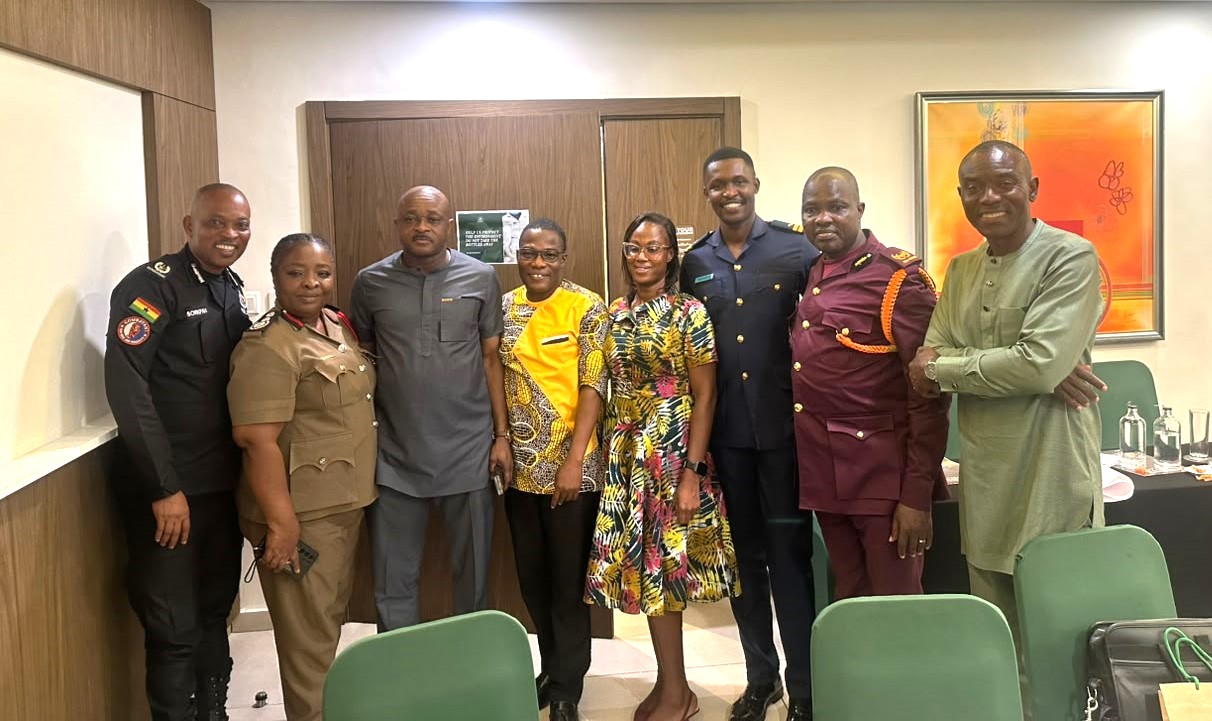
Participating institutions included the Ministry of the Interior, the Commission on Human Rights and Administrative Justice (CHRAJ), the Ghana Police Service, the Ghana National Fire Service, the Ghana Prisons Service, the Narcotics Control Commission (NACoC), the National Commission for Civic Education (NCCE), civil society organisations and the DIHR.
Delivering the welcome remarks on behalf of ASSN, Maj. Gen. Nii Carl Coleman highlighted the project’s overarching objective of strengthening human rights protection, building public trust and contributing to the prevention of radicalisation. He identified the development of a comprehensive, context-sensitive Human Rights Training Manual for the Ghana Police Service as a central component of the initiative. He emphasized that the manual would draw on Ghana’s specific context and incorporate the experiences and perspectives of police officers, as well as those who interact with and receive services from the Police. He further underscored the importance of broad-based stakeholder consultations in fostering institutional ownership, ensuring inclusivity and producing a manual that responds to the needs of relevant stakeholders. He expressed ASSN’s appreciation to its partners for their support and commended participants for their commitment to the process.
Speaking on behalf of the Commissioner of CHRAJ, Deputy Commissioner Madam Mercy Larbi welcomed the initiative and commended ASSN for adopting a consultative approach to developing the manual. She stressed that meaningful institutional engagement was essential to ensuring that the final product would be owned by the Ghana Police Service and responsive to the practical realities of policing in the country. She observed that a training manual that does not reflect the operational environment of police officers or enjoy their institutional ownership would have limited impact on changing professional practice.
Representing the Inspector-General of Police, COP Oklu Gyamera acknowledged that human rights have always been relevant to police service delivery but noted that shortcomings in their application had, at various times, affected public perceptions of the Service. He expressed optimism that the initiative would generate practical insights and innovative approaches to strengthening police service delivery, enhancing public acceptance and ensuring greater alignment with international standards.
Madam Regina Antwiwaah Tengey, representing the Technical Advisor to the Ministry of the Interior, emphasized that modern policing is measured not merely by the ability to maintain law and order but also by the extent to which law enforcement institutions uphold human dignity and fundamental human rights. She noted that respect for human rights is not an impediment to effective law enforcement but rather the bedrock for public trust, cooperation and democratic policing. She reaffirmed her outfit’s commitment to collaborating in the development of the manual and ensuring that it translates into positive, rights-respecting practices across the country.
Speaking on behalf of the DIHR and the Embassy of Denmark in Accra, Madam Camilla Silva Fløistrup highlighted Ghana’s special significance to the Institute, noting that research arising from Danish development cooperation in the country had demonstrated the effectiveness of a human rights-based approach to development. She explained that the programme seeks to support West African countries in strengthening stability and preventing violent extremism and radicalisation, emphasizing that sustainable stability must be firmly grounded in respect for human rights. She reiterated that states have an obligation to respect, protect and fulfil human rights, particularly in challenging circumstances, and encouraged strong national ownership of the initiative. She also reaffirmed DIHR’s commitment to supporting Ghana in advancing a human rights-based approach to policing.
Concluding the opening session, Rev. Enock Boadu Amo, delivering remarks on behalf of the Minister for the Interior, underscored that respect for human rights is fundamental to effective policing and essential for building public confidence in the Ghana Police Service. He highlighted the need for a professional police culture anchored in integrity, accountability and respect for human dignity. Welcoming the proposed training manual, he emphasized that it should provide practical guidance on critical areas of police operations, including arrests, the use of force, public order management, investigations, the treatment of vulnerable persons and community engagement. He further accentuated the importance of broad stakeholder consultations to ensure that the manual reflects the realities of frontline policing and stressed on effective accountability mechanisms as essential to sustaining public trust. He commended ASSN and DIHR for the initiative and formally declared the stakeholder engagement open, calling for constructive deliberations towards strengthening human rights protection and professional policing in Ghana.
The opening session was moderated by Dr. Emmanuel Sowatey, ASSN’s Project Lead.
FR
COMMUNIQUÉ DE PRESSE
L’ASSN lance un projet sur les droits de l’homme au sein de la police ghanéenne avec la participation des parties prenantes à l’élaboration d’un manuel de formation
19 novembre 2026 | Accra, Ghana – Le Réseau africain pour le secteur de sécurité (ASSN) a officiellement lancé la mise en œuvre de son projet sur les droits de l’homme au sein de la police ghanéenne par une première consultation les parties prenantes visant à amorcer l’élaboration d’un manuel complet de formation aux droits de l’homme destiné aux services de police ghanéens. Cette initiative fait suite à l’aval donné précédemment au projet par le ministre de l’Intérieur.
Cette consultation s’inscrit dans le cadre de la mise en œuvre du projet « Renforcer la protection des droits de l’homme, instaurer la confiance et prévenir la radicalisation au Ghana et en Afrique de l’Ouest », soutenu par l’Institut danois des droits de l’homme (DIHR) et financé par l’ambassade du Danemark au Ghana. Cet événement de deux jours, qui s’est tenu les 18 et 19 novembre 2026 à Accra, a permis de presenter aux acteurs nationaux clés la raison d’être, les objectifs et les résultats attendus du projet, tout en soulignant son importance stratégique pour la gouvernance du secteur de la sécurité et le programme de responsabilisation au Ghana. Il visait également à faciliter le dialogue, à recueillir les points de vue des institutions, à renforcer l’appropriation du projet par les parties prenantes et à identifier les opportunités de collaboration et d’alignement avec les priorités nationales existantes.
Parmi les institutions participantes figuraient le ministère de l’Intérieur, la Commission des droits de l’homme et de la justice administrative (CHRAJ), les services de police du Ghana, les services nationaux des pompiers du Ghana, l’administration pénitentiaire du Ghana, la Commission de contrôle des stupéfiants (NACoC), la Commission nationale pour l’éducation civique (NCCE), des organisations de la société civile et le DIHR.
Dans son allocution de bienvenue au nom de l’ASSN, le général de division Nii Carl Coleman a mis en avant l’objectif général du projet : renforcer la protection des droits de l’homme, instaurer la confiance du public et contribuer à la prévention de la radicalisation. Il a présenté l’élaboration d’un manuel de formation aux droits de l’homme complet et adapté au contexte du Service de police du Ghana comme un élément central de cette initiative. Il a souligné que ce manuel s’appuierait sur le contexte spécifique du Ghana et intégrerait les expériences et les points de vue des policiers, ainsi que ceux des personnes qui interagissent avec la police et bénéficient de ses services. Il a en outre insisté sur l’importance de consultations élargies avec les parties prenantes pour favoriser l’appropriation institutionnelle, garantir l’inclusivité et produire un manuel qui réponde aux besoins des bénéficiaires concernés. Il a exprimé la gratitude de l’ASSN envers ses partenaires pour leur soutien et a félicité les participants pour leur engagement dans ce processus.
S’exprimant au nom du commissaire de la CHRAJ, la commissaire adjointe, Mme Mercy Larbi, a salué cette initiative et a félicité l’ASSN d’avoir adopté une approche consultative pour l’élaboration du manuel. Elle a souligné qu’un engagement institutionnel significatif était essentiel pour garantir que le produit final soit pris en charge par les services de police du Ghana et qu’il réponde aux réalités pratiques du maintien de l’ordre dans le pays. Elle a fait remarquer qu’un manuel de formation qui ne refléterait pas l’environnement opérationnel des policiers ou qui ne bénéficierait pas de leur adhésion institutionnelle n’aurait qu’un impact limité sur l’évolution des pratiques professionnelles.
Représentant l’inspecteur général de la police, le commissaire Oklu Gyamera a reconnu que les droits de l’homme avaient toujours été au cœur de la prestation des services de police, mais a noté que des lacunes dans leur application avaient, à plusieurs reprises, affecté la perception que le public avait de la police. Il s’est montré optimiste quant au fait que cette initiative permettrait de dégager des enseignements concrets et des approches innovantes pour renforcer la prestation des services de police, améliorer l’acceptation par le public et garantir une meilleure conformité aux normes internationales.
Mme Regina Antwiwaah Tengey, représentant le conseiller technique du ministère de l’Intérieur, a souligné que la police moderne ne se mesure pas uniquement à sa capacité à maintenir l’ordre public, mais aussi à la mesure dans laquelle les institutions chargées de l’application de la loi respectent la dignité humaine et les droits fondamentaux. Elle a fait remarquer que le respect des droits de l’homme ne constitue pas un obstacle à une application efficace de la loi, mais bien le fondement de la confiance du public, de la coopération et d’une police démocratique. Elle a réaffirmé l’engagement de son institution à collaborer à l’élaboration du manuel et à veiller à ce qu’il se traduise par des pratiques positives et respectueuses des droits dans tout le pays.
S’exprimant au nom du DIHR et de l’ambassade du Danemark à Accra, Mme Camilla Silva Fløistrup a souligné l’importance particulière que revêt le Ghana pour l’Institut, notant que les recherches issues de la coopération danoise au développement dans ce pays avaient démontré l’efficacité d’une approche du développement fondée sur les droits de l’homme. Elle a expliqué que le programme visait à aider les pays d’Afrique de l’Ouest à renforcer la stabilité et à prévenir l’extrémisme violent et la radicalisation, soulignant qu’une stabilité durable devait être fermement ancrée dans le respect des droits de l’homme. Elle a réaffirmé que les États ont l’obligation de respecter, de protéger et de garantir les droits de l’homme, en particulier dans des circonstances difficiles, et a encouragé une forte appropriation nationale de cette initiative. Elle a également réaffirmé l’engagement du DIHR à soutenir le Ghana dans la promotion d’une approche des services de police fondée sur les droits de l’homme.
En conclusion de la séance d’ouverture, le révérend Enock Boadu Amo, s’exprimant au nom du ministre de l’Intérieur, a souligné que le respect des droits de l’homme est fondamental pour une action policière efficace et essentiel pour renforcer la confiance du public dans les services de police ghanéens. Il a mis en avant la nécessité d’une culture policière professionnelle fondée sur l’intégrité, la responsabilité et le respect de la dignité humaine. Accueillant favorablement le manuel de formation proposé, il a souligné qu’il devait fournir des orientations pratiques sur des domaines critiques des opérations policières, notamment les arrestations, le recours à la force, la gestion de l’ordre public, les enquêtes, le traitement des personnes vulnérables et l’engagement communautaire. Il a en outre insisté sur l’importance de consultations élargies avec les parties prenantes afin de garantir que le manuel reflète les réalités du travail de police de terrain, et a souligné que des mécanismes de responsabilité efficaces étaient essentiels pour maintenir la confiance du public. Il a félicité l’ASSN et le DIHR pour cette initiative et a officiellement déclaré ouverte la consultation, appelant à des délibérations constructives en vue de renforcer la protection des droits de l’homme et le professionnalisme des forces de police au Ghana.
La séance d’ouverture a été animée par le Dr Emmanuel Sowatey, chef de projet de l’ASSN.