

Non-state institutions and actors
The provision of security, safety and justice services in South Sudan is complementary and reinforcing. The way these services are delivered is well provided in the Constitution and in various legislations.
Cumulative evidence suggests that non-state security actors are sometimes more effective than state security actors in the delivery of security, safety and justice, particularly in the countries that are fragile or emerging from conflict, as the presence of state security actors is weak, particularly in rural settings. In South Sudan, a majority of citizens rely on informal institutions for security, safety and justice.
Legislation and non-state actors
There is often hybridity and pluralism in the provision of security, safety and justice with blurred or non-existent lines of jurisdiction between state and non-state, formal and informal, civilian and military, and traditional and modern, particularly in countries that are fragile and emerging from civil war such as South Sudan. Besides the recognition of the African Union of the role of the non-state actors in security sector governance, there is a legal framework in South Sudan within which the non-state actors could provide security, safety and justice services:
The Constitution
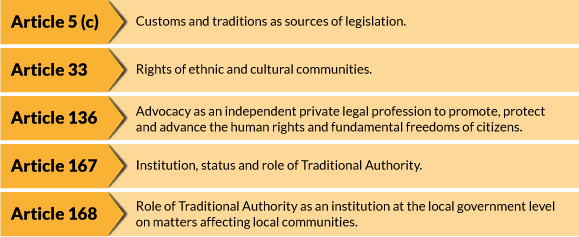
The 2011 Transitional Constitution of the Republic of South Sudan provides the following provision in recognition of non-state actors and informal institutions such as traditional authorities that are critical for the provision of conflict resolutions, peace, social order and justice:
The Local Government Act
The 2009 Local Government Act provides detailed provisions regarding the implementation of constitutional provisions. Traditional authority systems, customary law courts and their independence, status, and types of traditional authorities, composition, criteria for the establishment of decentralized chiefdoms, election or selection of chiefs and immunity of kings and chiefs are detailed in the following chapters:

South Sudan Police Service Act
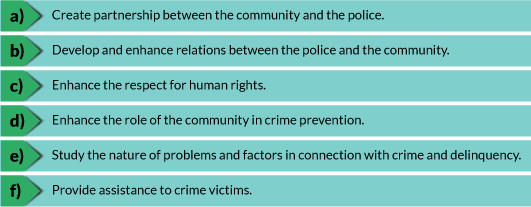
The Police Act provides for the establishment of community policing “to help the Police Service in the performance of its functions and duties and to mobilize the people for the preservation of law and order”. Section 15 defines the following objectives of the Community Policing:

The evolution of the traditional authorities is South Sudan has a similar pattern and trend as in other African countries. These authorities have gone through a series of changes, particularly during pre-colonial period, colonial period, the post-independence Sudan and the post-independence South Sudan.
The Pre-Colonial Period
The most important and relevant civilization to the context of South Sudan is Kush Kingdom that emerged around 1070 B.C. and established around the confluences of rivers Blue Nile, White Nile and Atbara in what is now known as northern Sudan (Leclant, 2004). Uniquely, the Kush Kingdom established a strong monarchic and centralized system of government with Nubian religion and language. The system of government was highly centralized and ruled by “god-kings”. The administration of justice was entrusted to priests. Whether Kush civilization is linked to South Sudan or not, the most important focus is on the role of traditional system of government in maintaining rule of law, peace and stability in the pre-colonial period.
The Colonial Period
The Turco-Egyptian and Mahdiyya Regimes (1821-1881)
The new regime imposed a militaristic and centralized unitary system of government as the most effective way of mobilizing slaves and ivory. This new system of government had a profound impact on the African ethnic groups and their traditional systems of government along south-north border of Sudan and changed the local balance of power in favour of Arab ethnic groups. During this period, the Turco-Egyptian authorities and private traders undertook slave raids on a considerable scale into what is today South Sudan. These slave raids by the Turco-Egyptian regime and Arab nomads had profoundly affected the prevailing system of traditional authorities in South Sudan.
The Anglo-Egyptian Regime (1898-1956)
The arrival of Anglo-Egyptian regime was resisted by many ethnic groups in South Sudan and that contributed later on to the adoption of various ordinances related to customary authorities, which culminated into the “Southern Sudan Policy” in 1930. As early as 1921 and before the formulation of Southern Sudan Policy, the system of government in southern Sudan had been based on the principles of “native administration”. In 1922, the Anglo-Egyptian regime enacted the Passport and Permits Ordinance that declared the entire South Sudan ‘closed districts’ and made it increasingly reserved to the native community and insulated from the world around it.
As the experience with the native administration was relatively successful in maintaining rule of law, peace and stability, the British rule formulated the “Southern Sudan Policy 1930”. Its memorandum stated that: “The policy of the Government in the southern Sudan is to build up a series of self-contained racial or tribal units with structures and organization based, to whatever extent to the requirements of equity and good governance permit, upon indigenous customs, traditional usage and beliefs”.
This policy contributed to restoring and protecting the systems and institutions of traditional authorities.
The Post-Independence Period (1956-)
The post-independence regime adopted an intermittently military or democratic centralized unitary system with the aim of establishing an Arab-Islamic state. It focused on dismantling the 1930 Southern Sudan Policy that was based on traditional system of government, and replacing it with an Arabization and Islamization policy of Southern Sudan. Despite this policy, the post-independence Sudanese central government legislature reaffirmed the Chiefs’ Courts Ordinance and recognized the status of customary law in Southern Sudan.
The 2005 Comprehensive Peace Agreement (CPA) did not explicitly recognize the customary authorities but put the local government and traditional and customary law under the exclusive powers of the state government. The 2005 Interim Constitution recognized not only the customs and traditions of the people of South Sudan as one of the sources of legislation but it also affirmed traditional authorities and their role. The 2011 Transitional Constitution affirms all the provisions related to traditional authorities, customs and traditions of the people of South Sudan.
The communities of South Sudan, like other communities in countries that are fragile and susceptible to violent conflicts and with weak or minimal presence of the state in rural areas, have developed different ways to protect their lives and livelihoods. The age-set group system is adopted by most communities of South Sudan, particularly the Nilotic societies, for communal mobilisation to maintain social order and protection.
However, since the eruption of the second Sudanese civil war between the Sudan Armed Forces (SAF) and the Sudan People’s Liberation Army (SPLA), this age-set group system has been militarised and securitised by three interconnected drivers. These drivers include, but not limited to, the resistance of community against the SAF and counterinsurgency warfare waged by their armed militias, the power struggle within and among Southern resistance movements, and the localised ethnic competition over resources.
This phenomenon of community armies transcends traditional approaches to the provision of security and safety, and also recognises the critical role actors outside the state play in providing protection and safety to the communities. Among the many armed community militias, the community defence forces of the major ethnic groups of Dinka, Nuer, Zande and Latuka are presented as follows:
Gelweng and Titweng can both be translated as ‘cattle guard’. They are community-based groups of armed actors of the Dinka of Bahr el Ghazal region whose guardianship of communities’ cattle is a central part of their identity. Although the formation of this group may appear ad hoc and temporary, its permanence is constructed around notions of clan-membership and sometimes age-sets, and shared the norms and moral boundaries of armed conflict, as well as the spiritual and physical dangers of combat, through songs, stories and observation.
Young adult Dinka men have long had responsibility for caring for and protecting their cattle. Formed, in collaboration with the Sudan People’s Liberation Army (SPLA), during the second Sudanese civil war (1983–2005) in the late 1980s and 1990s, the Titweng and Gelweng were used by the community as a local defense force against Arab militias and Nuer raids. Commanders in the SPLA also used them as informal paramilitary force, carrying weapons and
equipment, and proving a large, mobile reserve of fighters. Through their absorption into the war, these groups of Dinka youth acquired weapons and became a conduit for the transformation of the war into a bigger Dinka-Nuer confrontation.
The Gelweng and Titweng continued to operate to the west of the Nile in the wake of the 2005 Comprehensive Peace Agreement (CPA), which provided no clear, uncontested options for their future. Local demand for their protective services also remained high, as western Dinka communities continued to experience lethal, costly raids on their cattle by the government-sponsored Arab armed militias. But new proximity to the military also spelt significant changes, reducing the influence of chiefs and elders over their behaviour and eroding community norms that had limited their participation and conduct in violence.
Military interest in the Titweng and Gelweng had also underpinned a struggle for control over the forces between the community and government and contributed to a gradual blurring of the line between home and more remote ‘political’ wars. This process has continued since December 2013, as many former Titweng and Gelweng have been drawn into the SPLA, while others fought alongside the army and incorporated into the national presidential guard known as the Döt ku Beny (“Rescue the President”).
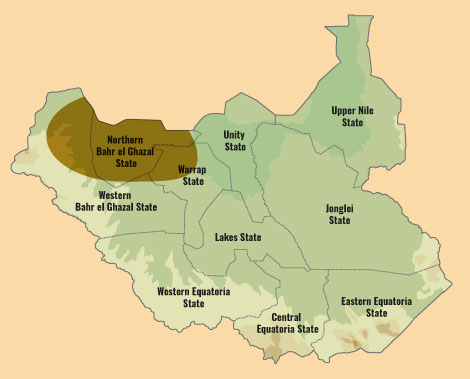
The name ‘White Army’ or Dec in bor in Nuer, is commonly thought to derive from the ash youth use to paint their bodies for protection against mosquitos. However, the term rather refers to the lack of uniforms and training for them, and contrasts with the ‘Black Army’ or Dec in char, a Nuer term for trained soldiers in uniform. The White Armies comprise of various Nuer community defence groups in the Greater Upper Nile region. These community armies are continuations of traditional Nuer mobilisation structures.
The involvement of Nuer youth in the White Armies is closely linked to their security responsibilities at home – their role as cattle keepers and protectors of the family’s cattle wealth. Similar to other pastoralist communities in South Sudan, Nuer boys go through an initiation ceremony to become men. They are given the prime responsibility of protecting the family’s cattle against wild animals and suspected enemies. This can involve participating in ‘blood feuds’, inter-communal wars and revenge attacks. Nuer youth coordinate their protection responsibilities as part
of territorial units at various levels – ranging from the smallest homestead unit to larger sections and even sub-ethnic groups.
The Nuer identify more closely with their immediate kinship groups than the larger sections and the greater ethnic group. Reflecting this, intra-Nuer feuds frequently occur between sections at various levels, over social matters, cattle, grazing and water points, and homicides. When faced with external threat, however, members of these groups often temporarily seek unity. This was most recently illustrated in their joint mobilisations in support of SPLA-In Opposition (SPLA-IO) during the first civil war in South Sudan in 2013.
Leadership within the White Armies is flexible and has evolved over time in response to changing security risks and dynamics. Larger mobilisations of White Armies required the permission and guidance of Nuer prophets, who would perform sacrifices and sometimes accompany youth in battles against neighbouring communities. The violence of the first and second civil wars in South Sudan, however, precipitated the introduction of new leadership positions and fighting tactics. With rising levels of insecurity, internal fragmentation among the Nuer, and local leadership vacuums, permanent leadership positions, known as kuaar burnam, were established.
The Kuaar burnam today have an expanded range of security responsibilities during both war and peace times. While they are better known for coordinating community defence and leading revenge attacks, these leaders are also responsible for mitigating internal disputes, as well as negotiating pasture access and peace agreements with neighbours. Despite being local initiatives, the White Armies’ efficient leadership and mobilisation structures have made them desirable allies for military and political actors, as seen during the second Sudanese civil war and in the first civil war in South Sudan. The increased decision-making powers of youth and their leaders within the White Armies has not eclipsed the role of elders and influential spiritual leaders, who continue to influence, both in terms of restricting and promoting decisions to engage in violence. As in the past, Nuer prophets play important roles in promoting internal peace and social cohesion among Nuer sections. Concurrently, some prophets have also promoted and morally sanctioned the participation of youths in large-scale violence through guidance and blessing of youth fighters ahead of raids and offensive attacks.
When war broke out in December 2013, Nuer White Armies in the Greater Upper Nile region fought alongside SPLM/A-IO against SPLM/A – in Government (SPLM-IG). Revenge for atrocities committed against Nuer civilians in Juba in the first few days of the war no doubt motivated many fighters of White Armies. Although the organisation of the White Armies takes place at local levels, political and military actors have always had strong interests in using these structures to pursue their own political and military aims.
Even though the SPLM/A-IO leadership depended on the military support of the White Armies, they did not always have control over the youth or even their leaders. Most youth, driven by local security obligations, have little interest in political agendas, long-term offensives, or being based in areas far away from home. In an attempt to enhance control over the youth and encourage recruitment into its military units, the SPLM/A-IO military leadership, like the SPLA in the 1980s, had increasingly sought to integrate Nuer youth leadership into their command structures, with the top Kuaar burnam receiving ranks, uniforms and training. The integration of former Kuaar burnam had facilitated coordination between the White Armies and SPLA-IO during joint civil-military offensives.
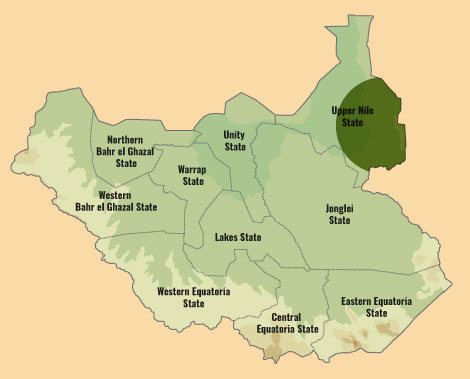
The term ‘Arrow Boys’ was, for years, used to describe community-based protection militias that emerged in the mid-2000s in the Azande areas to protect civilians from attacks by the Ugandan Lord’s Resistance Army (LRA).
The ‘Arrow Boys’ (named after their primary weapon – Arrow) mobilised in 2005 following the movement of the LRA from Eastern Equatoria into Western Equatoria along the Congolese border where they attacked communities. The peace talks mediated by what was then the semi-autonomous Government of Southern Sudan reached an agreement to designate an area in Western Equatoria’s border with the Democratic Republic of Congo (DRC) as the official assembly area of the LRA.
This agreement kept the LRA in the Azande area and that exposed communities to the recurrent attacks by the LRA. The movements by West Africa’s Ambororo nomads in the area added to security fears. The alleged Ambororo collaboration with the LRA increased citizens’ perception
t hat effective protection was urgently needed. The formation of the Arrow Boys was, thus, a response to a clearly identifiable security threat. The formation of this protection militia was supported by the then state government of Western Equatoria, and later, by the central government. This was an implicit acknowledgement that neither the SPLA nor the UN forces present in the area at the time were able to effectively protect communities from LRA attacks.
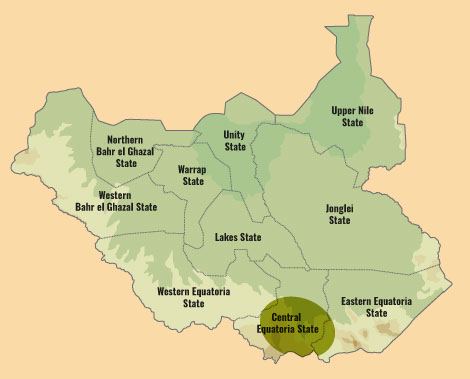
The Arrow Boys operated mainly in rural areas, along the border with the DRC, where they patrolled and responded to attacks. With the majority of Western Equatorians dependent on agriculture and hunting, the Arrow Boys functioned superbly in the bushes along the border with the DRC and the Central African Republic (CAR), to secure both hunting ground and farmland. There were very few incidents reported in which the Arrow Boys did not act in the interest of their communities, and the continued community support to them shows that they were seen as legitimate actors. The community’s response to the LRA threat, through the Arrow Boys, in the face of the SPLA’s failure to protect them from LRA attacks, was widely acknowledged to be more effective than any other armed forces stationed in the area.
Since the formation of the Arrow Boys, membership had been fluid and not limited by age or sex. Core groups were often made up of young men who suspended their livelihood activities, such as farming and hunting, to go on patrol. When security threat was high, however, the numbers of the Arrow Boys swelled (sometimes to encompass whole villages) and included women and older men, if the situation so required. Groups of Arrow Boys organised locally, with the most active operating along the border, from Maridi to Tombura counties.
Even bigger towns like Yambio, the capital of Western Equatoria state, mobilised, if needed, though, generally, only in response to high security threat. Groups depended on community donations for sustenance, with some communities collecting ‘Arrow Boy’ tax or levy. Embedded in the community, the Arrow Boys reflected and relied on local governance structures. This also meant that they generally did not pose a political or social challenge to local mechanisms.
Leadership was flexible and impermanent, often tight for the duration of a patrol but easing up soon thereafter. While many areas nominally had an Arrow Boys’ ‘head’, command structures varied significantly between individuals, and heads always worked closely with local chiefs or Payam administrators. In some areas, the Arrow Boys also supported local justice systems, working with chiefs and helping to apprehend people summoned to the local customary court. Beyond adhering to a loose hierarchy, the Arrow Boys neither clearly organised into military ranks, nor did they aspire to a unified structure across all of Western Equatoria.
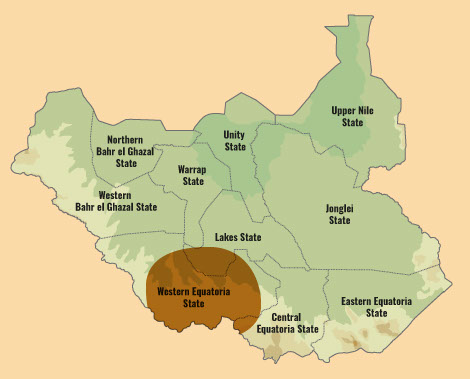
The Otuho society is structured by an age-set system which allocates social and political roles, dividing the male population into well-defined strata. Women have a separate age-set system which, rather than remaining important throughout the life of an individual, is of limited significance after marriage. The position of each individual is defined by these age groupings, with members deferring to those in more senior strata. The Otuho people have four primary male age grades: Aduri (Children), Aduri-horwong (Youths – 15-20 years), Monyemiji (Owners of the village) and Amarwak (Elders). Aduri have no corporate existence. The boys are charged with various errands and other menial chores by their parents, but they are not organised to perform any chores at the behest of Aduri-horwong or Monyemiji.
The Aduri-horwong are formally organised into an age grade that is responsible to the Monyemiji. Recruitment into the age grade is carried out by the Aduri-horwong themselves but they must report to the Monyemiji. Members
of the Aduri-horwong are in a transitional status, spending no more than seven or eight years in the age grade on their way to becoming members of the Monyemiji and, hence, recognition as adults. They perform various tasks at the ward and village levels, and their activities come directly under the purview of the Monyemiji. Violation of any social codes, either individually or collectively, attracts heavy punishment (including levy) to discourage future transgressions.
The Monyemiji are the central political and social force of the village. It is their responsibility to safeguard the security and welfare of the people and to make and implement political decisions. The Monyemiji act as a unit for the common defence of the village against external danger; they negotiate with the rainmaker chief and mollify him in times of hardship, and they discuss developments and problems in the village, trying to find solution to them.
The Monyemiji constitute the village government with a traditionally-bestowed mandate to guarantee the peaceful advancement of the people’s welfare. Their term of office runs for more than two decades (22 years) whereupon they are replaced by a new generation of leadership formalised at Efira, a ceremony which brings together people from many other villages. As for the Amarwak (elders), they have no formal political leadership role; they do not act as a corporate unit, and yet they command respect and deference from others. Furthermore, their wisdom in the customs of the people is highly respected and their advice is sought by both political novices and veterans who crave for more knowledge and influence.
Some of the powers of the Monyemiji are: monopoly in dealings with external authorities such as the government or other villages, mandate to act according to the best interests of the village, right to expel from the village anybody who subverts peace and harmony, dispute resolution, collective defence of Otuho people, censure of people who exhibit anti-social behaviour and ultimate decision-making. When the village confronts an external force threatening its security, the political powers of the Monyemiji transcend village/ward boundaries.
During the Sudanese civil wars (1955-1972, 1983-2005), Otuho people, through the Monyemiji, effectively mobilised their youth to support the armed movements fighting against the central government in Khartoum. In the South Sudanese civil wars (2013-2015, 2016-2018), the Monyemiji were less actively engaged in national conflict. Although some individual members may have joined the recent rebellion against the government, the Monyemiji, as a collective, avoided being drawn into the fighting between the SPLA-IO and the government, on either side. The Monyemiji were able to resist and deter indiscriminate attacks by government forces, reportedly because they were well-armed and organised and had clear lines of communication with the state and county government. They have played an important informal role in local confidence-building and security cooperation between the government and armed opposition. Hybrid arrangements involving cooperation between the Monyemiji, the state government and the SPLA-IO were very effective to secure roads and movement in the areas of Otuho, and was an example of hybrid security cooperation that was perceived as effective and legitimate, both by communities and authorities.
The militarisation of the community defence groups has intensified, with new forms after the eruption of the first civil war in the newly independent South Sudan in 2013. These community militias differ from other armed actors with political identity and objectives, as they have been formed either for self-defense from other communities or deployed against the state’s armies perceived as not neutral or appropriated by aggrieved politicians who missed positions in government.
The self-seeking political leaders in South Sudan have manipulated conflict and communities for their own strategic gains by using violence as a tool for differentiation and group formation. With persistent violent conflicts that affected all the communities, there has been proliferation of community armed militias with almost every community in South Sudan having improvised mechanisms for their security and protection. Although these community armies have been successful in providing relative security, they have, in some incidents, exacerbated violence and become a source of insecurity to the communities.
The phenomenon of the organised armed groups is new in South Sudan but it became prevalent during the counterinsurgency warfare in the Sudan’s second civil war (1983 – 2005). This phenomenon became even more rampant during the first (2013 – 2015) and the second (2016 – 2018) civil wars in South Sudan.
The proliferation of the organised armed groups increased considerably during the 2015 and 2018 Peace Agreements. This is attributed largely to the pattern of peace agreements that rewarded the armed groups in the power-sharing arrangements and created a gun-class that dominates the political marketplace in South Sudan.

Organised Armed Groups
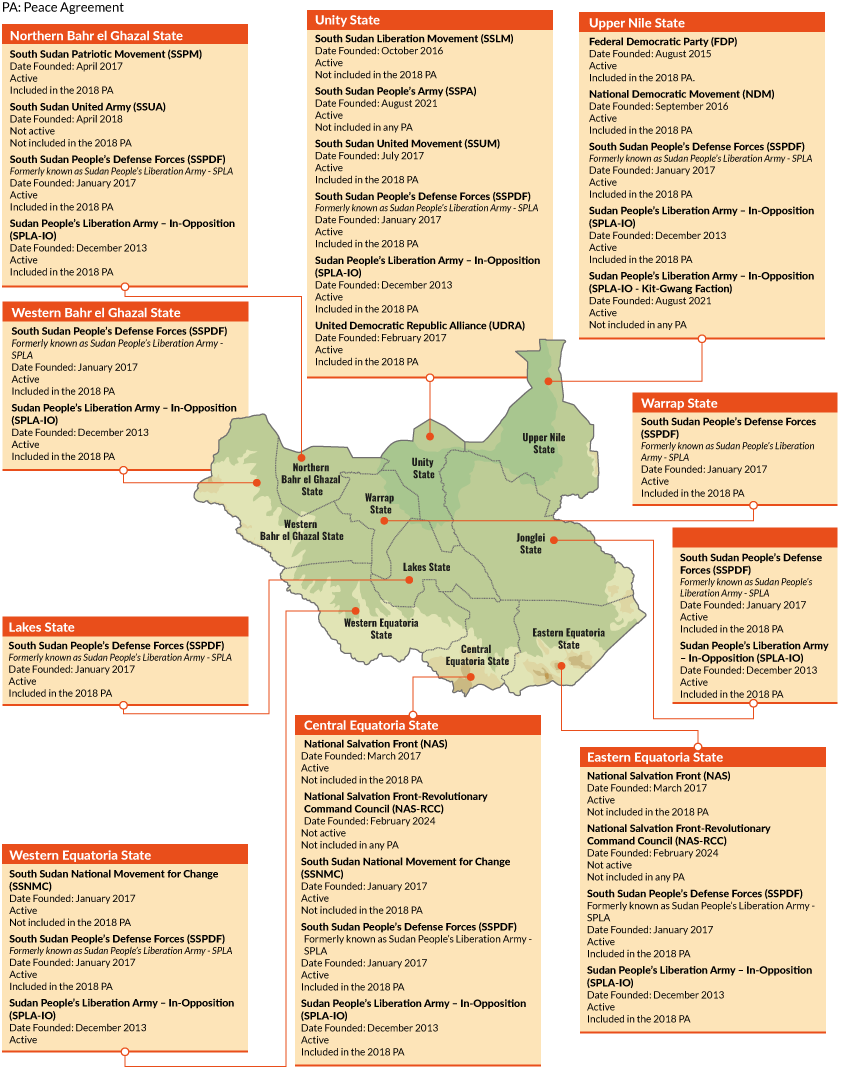
Sources: Luka Biong Deng Kuol, HSGO expert. David Deng, Compound fractures: political formations, armed groups and regional mediation in South Sudan.
Political Parties and Armed Groups Signatories to the 2018 Peace Agreement (R-ARCSS)

Sudan People’s Liberation Movement / Army in Opposition (SPLM/A-IO) **
* The SSPDF is the national armed forces of the Republic of South Sudan. Although the SSPDF may not fit into the definition of organised armed groups, its history of formation provides some characteristics and traits of the organised armed group. It was formerly known as the Sudan People’s Liberation Army (SPLA), the military wing of the Sudan People’s Liberation Movement (SPLM) that fought more than 20 years (1983 – 2005) against the Sudanese Armed Forces. After the signing of the Sudan Comprehensive Peace Agreement in 2005, the SPLA was recognised as part of the national armed forces of Sudan. With the independence of South Sudan in 2011, the SPLA became the national armed forces of the new Republic of South Sudan. Following the eruption of the first civil war in 2013, the SPLA split into two factions along ethnic lines with one faction supporting Gen. Salva Kiir, the President of South Sudan, and the other faction supporting Dr. Riek Machar, the Vice President of South Sudan. Its name was later changed to the SSPDF.
**Led by Riek Machar, the SPLM/A has been the main armed opposition and emerged after the SPLA split in 2013.
Political Parties and Armed Groups Not-Signatories to the 2018 Peace Agreement (R-ARCSS)

Revive South Sudan Party (RSSP
Upper Nile Liberation Front
(UNLF)
Upper Nile Liberation Front
(ULF)
United South Sudan Revolutionary Movement (USSRM)
South Sudan United National
Front (SSUNF)
